

How to Start a Clothing Brand in Nepal: A Step-by-Step Guide
September 6th 2026
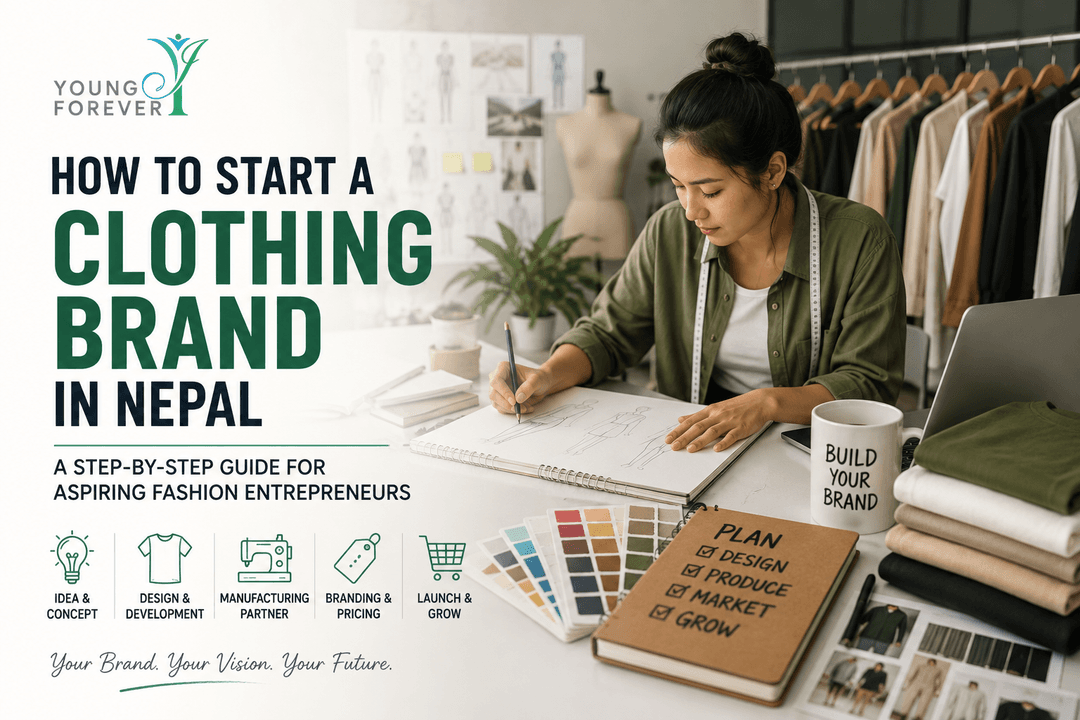
How to Start a Clothing Brand in Nepal: A Step-by-Step Guide
Starting a clothing brand in Nepal requires more than creating a logo and producing a few garments.
A successful apparel business requires a clear target market, strong product concept, reliable clothing manufacturing, appropriate pricing, effective branding, and a strategy for reaching customers.
Whether you want to start a small local fashion label, an online clothing business, or eventually sell your products internationally, careful planning can help you avoid common mistakes.
This guide explains how to start a clothing brand in Nepal, from developing your initial concept to finding a manufacturer and launching your first collection.
1. Define Your Clothing Brand Concept
Start by deciding what your clothing brand will represent.
The Nepali apparel market includes many different categories, so attempting to sell everything from the beginning can make it difficult to establish a clear identity.
Consider:
What type of clothing will you sell?
Who is your target customer?
What makes your products different?
What problem or need does your brand address?
What price range will you target?
Will you sell online, through physical stores, or both?
You could develop a brand focused on streetwear, premium basics, activewear, traditional-inspired clothing, children's clothing, workwear, outdoor apparel, or another specific category.
A focused concept makes product development and marketing easier.
2. Research Your Target Market
Before investing heavily in inventory, research the customers you want to reach.
Look at:
Existing clothing brands
Competitor products
Product categories
Price points
Customer preferences
Shopping behavior
Distribution channels
Market gaps
Study both established and emerging clothing brands.
Do not only look at what competitors sell. Examine how they position themselves and communicate with customers.
Ask yourself:
Why would a customer choose my clothing brand instead of an existing alternative?
The answer should influence your product development, branding, pricing, and marketing strategy.
3. Choose a Specific Niche
A niche gives your clothing brand a clear direction.
Instead of launching a large collection of unrelated products, consider starting with a focused product category.
Examples include:
Premium T-shirts
Oversized streetwear
Sustainable clothing
Activewear
Women's contemporary clothing
Men's essentials
Outdoor apparel
Workwear
Children's clothing
A focused product range can make manufacturing, inventory management, marketing, and brand development easier.
Once you understand customer demand, you can expand your product range.
4. Develop Your Clothing Designs
Once you have established your product direction, start developing your designs.
Your process may begin with:
Sketches
Mood boards
Reference products
Fabric ideas
Color palettes
Measurements
For professional garment production, these ideas need to be converted into clear production specifications.
Depending on the product, a manufacturer may require:
Measurements
Fabric specifications
Construction details
Stitching requirements
Colors
Printing requirements
Embroidery requirements
Labels
Finishing specifications
For complex garments, a technical specification sheet or tech pack can make communication with the manufacturer easier.
5. Find a Clothing Manufacturer in Nepal
Finding the right clothing manufacturer is one of the most important steps in starting an apparel brand.
Manufacturers differ in their production capabilities, minimum order quantities, garment specialization, quality-control processes, and customization options.
When evaluating a manufacturer, consider:
Product specialization
Minimum order quantity
Sampling capabilities
Production capacity
Fabric sourcing
Quality control
Lead times
Customization
Private-label services
Pricing
Do not choose a manufacturer based solely on the lowest price.
A reliable manufacturer that provides consistent quality and clear communication can be more valuable over the long term.
6. Develop a Product Sample
Before placing a large production order, develop a sample.
A sample allows you to evaluate the actual garment and identify problems before bulk production.
Check:
Fit
Measurements
Fabric quality
Stitching
Construction
Color
Printing
Embroidery
Labels
Finishing
If changes are necessary, make them before approving the product for bulk production.
Correcting a problem during development is generally easier than correcting hundreds of finished garments.
7. Decide How Much Inventory to Produce
Determining your initial production quantity can be challenging.
Producing too much inventory can tie up capital and leave you with unsold products.
Producing too little can result in stockouts and missed sales.
Consider:
Expected demand
Available capital
Manufacturing MOQ
Number of designs
Number of colors
Number of sizes
Sales channels
Expected launch performance
A focused initial collection can make inventory management easier for a new brand.
8. Calculate Your Total Costs
Before setting your selling price, calculate the complete cost of bringing your products to customers.
Costs can include:
Product development
Sampling
Fabric
Manufacturing
Labels
Packaging
Website development
Photography
Marketing
Shipping
Storage
Payment processing
Taxes
Other business expenses
Manufacturing cost is only one part of the total cost of running a clothing business.
Understanding your complete cost structure will help you set more sustainable prices.
9. Set Your Selling Price
Your selling price should reflect your costs, target market, brand positioning, and desired margin.
Consider:
Manufacturing cost
Operating expenses
Marketing costs
Competitor prices
Brand positioning
Customer expectations
Desired profit margin
Wholesale requirements
A premium clothing brand and a budget clothing brand can have very different pricing structures.
Your pricing should be consistent with the value and positioning you want your brand to communicate.
10. Build Your Brand Identity
A clothing brand's identity goes beyond its logo.
It includes:
Brand name
Logo
Colors
Typography
Photography
Packaging
Labels
Communication style
Brand story
Think about how you want customers to perceive your brand.
Your brand could be positioned as:
Premium
Minimal
Youthful
Technical
Sustainable
Traditional
Urban
Accessible
Consistency across your website, social media, packaging, and products helps create a recognizable identity.
11. Set Up Your Business
Before beginning commercial operations, make sure your business is established according to the applicable requirements in Nepal.
Depending on your business structure and activities, this may involve:
Business registration
Tax registration
Accounting
Invoicing
Import and export requirements, where applicable
Product labeling requirements
Other applicable business obligations
Requirements can vary depending on how your business is structured and operates. Professional business or legal advice can help ensure that your business meets applicable requirements.
12. Create Your Online Store
An online store can help customers discover and purchase your products.
Your website should clearly communicate:
Brand information
Product details
Prices
Sizes
Materials
Product photographs
Shipping information
Return and exchange policies
Contact information
Product photography is particularly important for online clothing businesses because customers cannot physically inspect garments before purchasing.
13. Build Your Social Media Presence
Social media can help a new clothing brand build awareness and reach potential customers.
Instead of posting only product photographs, consider creating content around:
Product development
Behind-the-scenes production
Styling
Brand stories
Customer experiences
New collections
Product education
Founder stories
The objective is to build familiarity and trust with potential customers rather than making every post a direct sales advertisement.
14. Plan Your First Collection
Your first collection does not need to contain dozens of products.
A focused collection can make it easier to:
Control production costs
Manage inventory
Maintain consistent branding
Test customer demand
Gather customer feedback
Improve future products
Your first collection can also provide valuable information about which products, colors, sizes, and price points customers prefer.
15. Launch and Collect Customer Feedback
After your products are ready, launch your collection and monitor customer response.
Pay attention to:
Best-selling products
Customer questions
Product reviews
Returns
Size-related complaints
Repeat purchases
Social media engagement
Use this information to improve future products and collections.
A clothing brand should evolve based on customer feedback and actual sales data rather than assumptions alone.
16. Build a Long-Term Manufacturing Relationship
Finding a manufacturer is only the beginning.
As your brand grows, your manufacturing relationship becomes increasingly important.
A reliable production partner can help maintain:
Consistent quality
Product specifications
Production schedules
Material standards
Repeat-order consistency
Before each production run, confirm the specifications and requirements rather than assuming that everything will remain unchanged.
17. Consider Private Label Manufacturing
Private-label manufacturing can be an option for businesses that want to build their own clothing brand without establishing their own production facility.
A private-label manufacturer produces garments according to agreed specifications, while the finished products are sold under the brand's identity.
Depending on the manufacturer, private-label services can include:
Product development
Custom designs
Fabric selection
Garment manufacturing
Brand labels
Hangtags
Packaging
This allows a business to focus on branding, marketing, sales, and customer relationships while working with a manufacturing partner for production.
Common Mistakes When Starting a Clothing Brand
Starting With Too Many Products
Launching too many styles, colors, and sizes can increase production costs and create inventory-management challenges.
Choosing a Manufacturer Based Only on Price
The lowest production cost does not necessarily provide the best overall value.
Skipping Product Samples
Samples provide an opportunity to identify problems before committing to bulk production.
Not Defining the Target Customer
A brand that attempts to appeal to everyone can struggle to establish a clear identity.
Underestimating Total Costs
Manufacturing is only one component of the cost of running a clothing business.
Ignoring Customer Feedback
Customer feedback can reveal problems and opportunities that may not be obvious during product development.
How Much Does It Cost to Start a Clothing Brand in Nepal?
There is no single cost for starting a clothing brand in Nepal.
The required investment depends on factors such as:
Product development
Sampling
Manufacturing
Minimum order quantities
Fabric and materials
Labels and packaging
Branding
Website development
Photography
Marketing
Storage
Shipping
A small clothing brand starting with a limited collection will have very different startup requirements from an established business launching a large collection.
The best approach is to prepare a detailed budget based on your actual products, production quantities, and sales strategy.
Final Thoughts
Starting a clothing brand in Nepal requires a combination of market research, product development, manufacturing, branding, financial planning, and marketing.
The process becomes easier when you approach it systematically.
Start by defining your target customer and product concept. Research the market, develop your designs, find an appropriate clothing manufacturer, create samples, calculate your costs, and launch with a manageable collection.
As your brand grows, you can expand your product range, increase production volumes, introduce new collections, and develop stronger relationships with manufacturing partners.
Young Forever works with businesses looking to develop and manufacture garments for their own brands.