

How to Choose Clothing Manufacturing in Nepal: A Complete Guide
September 6th 2026
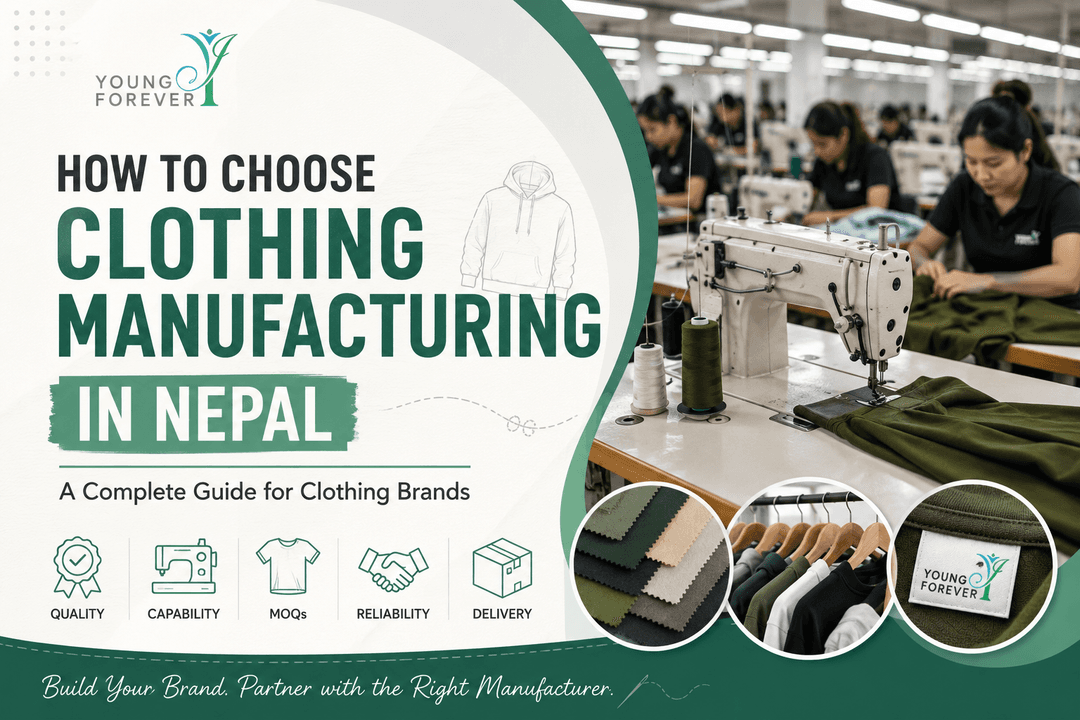
How to Choose Clothing Manufacturing in Nepal: A Complete Guide
Choosing the right clothing manufacturer is one of the most important decisions when starting or growing a clothing brand. Your manufacturing partner can directly affect product quality, production costs, delivery timelines, inventory, and customer satisfaction.
Nepal has a growing garment manufacturing industry, with manufacturers offering different production capabilities, garment categories, minimum order quantities, and levels of customization.
Whether you are starting a new clothing brand, developing a private-label collection, or looking for a long-term wholesale manufacturing partner, it is important to evaluate manufacturers based on your specific requirements.
This guide explains the key factors to consider when choosing a clothing manufacturer in Nepal.
What Is a Clothing Manufacturer?
A clothing manufacturer is a company that produces garments according to the requirements of a brand or business.
Depending on the manufacturer, the production process may include fabric sourcing, pattern development, cutting, stitching, finishing, quality control, labeling, packaging, and other production services.
Some manufacturers produce garments based on designs and specifications provided by a client, while others can assist with product development and sampling.
Before choosing a manufacturer, it is important to understand exactly what services you need.
Define Your Manufacturing Requirements
Before contacting clothing manufacturers in Nepal, establish your production requirements.
Consider the following questions:
• What types of garments do you want to manufacture?
• How many pieces do you need?
• What fabrics do you want to use?
• Do you already have finished designs?
• Do you have technical specifications or tech packs?
• Do you need custom labels?
• Do you need custom packaging?
• What sizes and colors will you require?
• How frequently will you place orders?
• What production timeline do you expect?
A business producing a small collection of T-shirts will have different requirements from an established brand producing thousands of jackets or other garments.
Having clear requirements makes it easier for a manufacturer to determine whether it can handle your project.
Evaluate Production Capabilities
One of the first things to evaluate is whether a manufacturer's production capabilities match your requirements.
Ask potential manufacturers about the types of garments they regularly produce.
These may include:
• T-shirts
• Shirts
• Hoodies
• Sweatshirts
• Jackets
• Pants
• Dresses
• Activewear
• Outerwear
• Uniforms
• Other specialized garments
Experience with your particular garment category can be important because different products require different construction methods, equipment, materials, and production expertise.
Check Minimum Order Quantities
Minimum order quantity, or MOQ, refers to the smallest quantity a manufacturer is willing to produce for an order.
MOQ is particularly important for new clothing brands because a high minimum order can require a significant upfront investment.
When discussing MOQ, clarify whether the minimum applies to:
• Each product style
• Each color
• Each size
• The entire order
Also ask whether the MOQ is different for samples, initial orders, and repeat orders.
Understanding these requirements before beginning production can help you plan your budget and inventory.
Ask About Sampling
A sample allows you to evaluate a garment before committing to bulk production.
During the sampling process, you can check:
• Fit
• Measurements
• Fabric
• Stitching
• Construction
• Color
• Printing
• Embroidery
• Labels
• Finishing
If changes are required, the sample can be revised before bulk manufacturing begins.
Sampling is particularly important for custom clothing because problems identified after bulk production can be significantly more difficult and expensive to correct.
Evaluate Fabric and Material Sourcing
The quality of a finished garment depends heavily on its materials.
Ask the manufacturer whether it can source the required fabrics and trims or whether you need to supply them yourself.
Important factors include:
• Fabric composition
• Fabric weight
• Color
• Durability
• Shrinkage
• Fabric availability
• Buttons
• Zippers
• Thread
• Labels
• Other trims and accessories
Be as specific as possible about your material requirements.
For example, instead of simply requesting "heavy cotton," provide the relevant fabric specifications whenever possible.
Review Quality Control Procedures
Quality control should be considered before production starts.
Ask potential manufacturers how they inspect garments during and after production.
Quality checks may include:
• Measurements
• Stitching
• Fabric defects
• Color consistency
• Seams
• Printing
• Embroidery
• Zippers and buttons
• Labels
• Finishing
• Packaging
It is also useful to establish product specifications and quality expectations before placing a bulk order.
Clear standards give both the brand and manufacturer a common reference for evaluating the finished products.
Consider Production Capacity
A manufacturer may be capable of handling your current order but unable to support larger orders as your business grows.
Ask about:
• Current production capacity
• Production capacity for your specific garment category
• Typical order volumes
• Production schedules
• Peak-season capacity
• Ability to accommodate repeat orders
If you expect your clothing brand to grow, choosing a manufacturer that can scale with your requirements can help you avoid changing production partners later.
Understand Production Lead Times
Lead time refers to the amount of time required to complete an order.
The overall manufacturing timeline may include:
Product development
Sampling
Sample revisions
Material sourcing
Bulk production
Quality control
Finishing
Packaging
Delivery
Ask for a realistic production timeline before confirming an order.
Lead times are especially important for seasonal clothing brands because production delays can affect product launches, marketing campaigns, wholesale commitments, and inventory availability.
Compare Pricing Carefully
Price is an important consideration, but the lowest manufacturing quote is not necessarily the best option.
When comparing manufacturers, determine exactly what is included in the quoted price.
This may include:
• Fabric
• Trims
• Cutting
• Stitching
• Printing
• Embroidery
• Labels
• Packaging
• Sampling
• Quality control
• Transportation
Two manufacturers may provide different prices because they are using different materials or offering different services.
The total cost should therefore be considered rather than comparing only the quoted cost per garment.
Evaluate Communication
Communication is an important part of the manufacturing process.
Garment production often requires discussions about designs, specifications, samples, revisions, materials, quantities, and delivery schedules.
When evaluating a potential manufacturer, consider whether it:
• Understands your requirements
• Asks relevant questions
• Provides clear quotations
• Communicates production timelines
• Explains potential limitations
• Responds consistently
• Provides production updates
Good communication can reduce misunderstandings and production problems.
Review Previous Work
Ask potential manufacturers about their previous work and experience.
Depending on confidentiality arrangements, a manufacturer may be able to provide examples of:
• Previous garments
• Product samples
• Different garment categories
• Custom manufacturing projects
• Production capabilities
Relevant experience is especially important when manufacturing products that require specialized construction or finishing.
Consider Private Label Capabilities
If you are building your own clothing brand, you may require more than basic garment production.
Private-label manufacturing allows a manufacturer to produce garments that are sold under your brand identity.
Depending on the manufacturer, this can include:
• Custom garments
• Brand labels
• Size labels
• Hangtags
• Packaging
• Custom designs
• Product development
If building a recognizable clothing brand is your goal, ask manufacturers specifically about their private-label capabilities.
Check Customization Options
Different brands require different levels of customization.
Ask whether the manufacturer can accommodate requirements for:
• Custom patterns
• Fabric selection
• Custom colors
• Embroidery
• Printing
• Labels
• Packaging
• Hardware
• Finishing
The more customized your products are, the more important it is to work with a manufacturer capable of handling your specific requirements.
Choose a Manufacturer That Fits Your Business
The largest manufacturer is not necessarily the best manufacturer for every business.
A new clothing brand may prioritize:
• Lower MOQs
• Product development support
• Sampling
• Flexible production
• Direct communication
An established brand may prioritize:
• Large production capacity
• Consistent quality
• Shorter lead times
• Scalability
• Supply chain efficiency
The right question is not simply how large the manufacturer is.
The better question is whether the manufacturer can consistently meet your specific requirements.
Start With Samples or a Smaller Production Order
If possible, evaluate a manufacturer through samples or an initial smaller production order before committing to a larger long-term arrangement.
This gives you an opportunity to assess:
• Product quality
• Communication
• Production accuracy
• Delivery reliability
• Packaging
• Quality control
Once you are satisfied with the results, you can consider increasing your production volume.
Questions to Ask a Clothing Manufacturer in Nepal
Before selecting a manufacturer, consider asking:
What types of garments do you specialize in?
What is your minimum order quantity?
Do you provide samples?
Can you source fabrics and trims?
Can you work from technical drawings or tech packs?
Do you offer private-label manufacturing?
Can you produce custom labels and packaging?
What is your typical production lead time?
What quality-control procedures do you follow?
What is your production capacity?
What information do you need to provide a quotation?
Can you support repeat orders as the business grows?
Clothing Manufacturer Evaluation Checklist
When comparing manufacturers, evaluate them based on:
Product expertise: Experience with your garment category
MOQ: Minimum production quantity
Sampling: Ability to develop and revise samples
Materials: Fabric and trim sourcing capabilities
Quality: Quality-control procedures
Capacity: Ability to handle current and future production requirements
Lead time: Production and delivery timelines
Customization: Ability to provide custom designs, labels, packaging, and finishing
Communication: Responsiveness and clarity
Pricing: Overall production cost
Private label: Ability to manufacture products under your brand
Final Thoughts
Choosing a clothing manufacturer in Nepal requires more than comparing production prices.
Product quality, manufacturing capabilities, MOQ, sampling, communication, lead times, customization, and production capacity should all be considered before making a decision.
For a new clothing brand, the right manufacturing partner can help turn product concepts into finished garments while allowing the brand to focus on branding, marketing, and sales.
Before placing a large order, define your requirements clearly, evaluate samples, compare manufacturers, and establish production expectations from the beginning.
Young Forever works with businesses looking to develop and manufacture garments according to their product and branding requirements.